How to Locate a Water Line Using Direct Connection
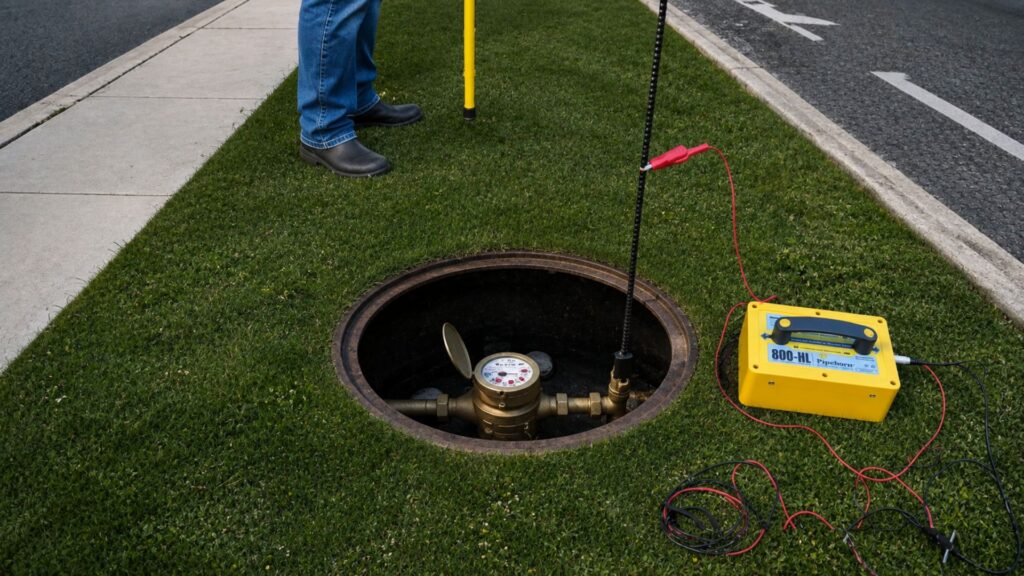
When you need to locate a metallic water line, direct connection applies the transmitter signal directly to the target infrastructure. A buried water valve can provide a useful connection point, but the operating nut may sit well below grade. A conductive steel valve key can extend that metal-to-metal contact to the surface, giving crews an accessible point for connecting the Pipehorn transmitter lead and tracing the water line from above ground.
Using a Buried Water Valve as a Direct-Connection Point
Direct connection works best when the transmitter can make a reliable conductive connection to the utility being traced.
On buried water valves, the operating nut may be several feet below the surface inside a valve box.
A steel main valve key can bridge that distance: the key seats onto the operating nut below grade while the exposed steel provides a more accessible point above ground for attaching the Pipehorn Conductive Cable Assembly.
The locating signal can then be applied through the key to the connected metallic line.
How to Direct Connect and Locate the Water Line
1. ACCESS
Open the Valve Box
Access the buried valve box and identify the operating nut below grade.
2. SEAT
Make Metal-to-Metal Contact
Place a conductive steel main valve key securely onto the valve operating nut so the key maintains metal-to-metal contact.
3. CONNECT
Attach the Pipehorn Lead
Connect the Pipehorn transmitter conductive lead to an appropriate exposed metal point on the valve key and complete the transmitter setup as required.
4. LOCATE
Trace the Water Line
Apply the locating signal and use the Pipehorn receiver to trace the connected metallic water line from above ground.
See Direct Connection in the Field
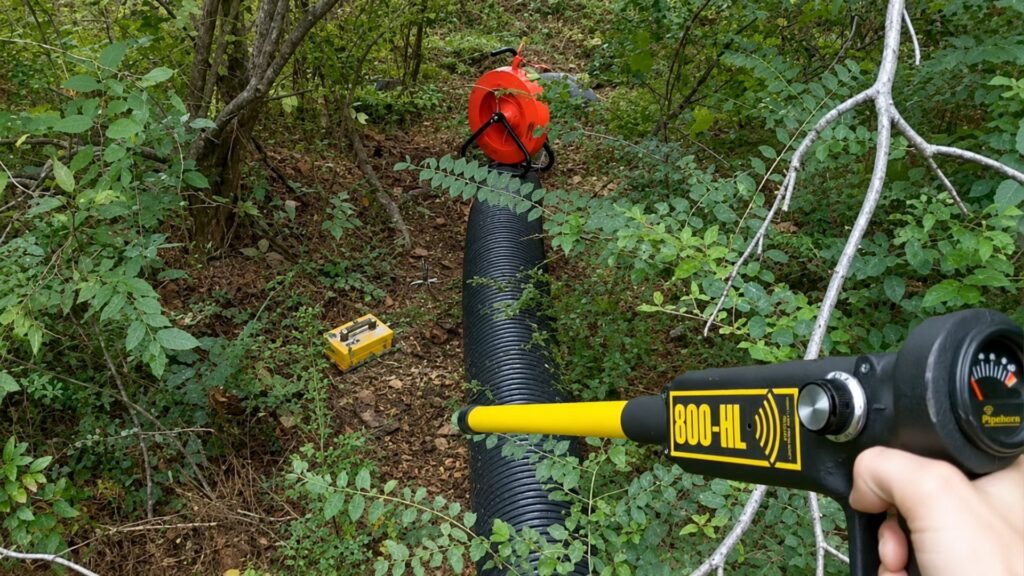
Watch how a Pipehorn is direct connected to a water service and used to trace the line, including when changing locating frequencies can help follow the target.
Where Direct Connection Can Help with Water Line Locating
Direct connection provides a reliable way to apply a locating signal to metallic water lines. When the connection point is below grade, a conductive valve key can provide accessible metal-to-metal contact from the surface.
Below-Grade Valve Access
Create an accessible connection point when the valve operating nut is below comfortable reach.
Buried Metallic Water Line
Apply a transmitter signal through the valve/key connection to trace a conductive water line.
Water Distribution Maintenance
Use an existing valve access point as part of the locating workflow before maintenance, repair, or excavation.
Municipal & Public Works Locating
Give crews another direct-connection option when working around buried water infrastructure.
Pipehorn Locators for Water Line Locating
High-Frequency Locator
480 kHz
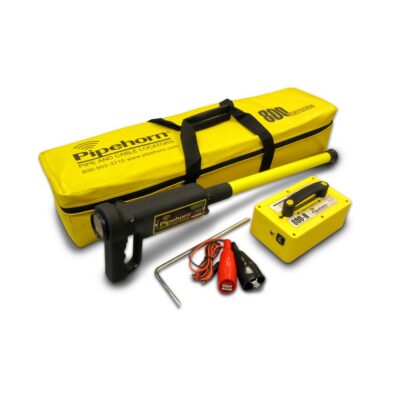
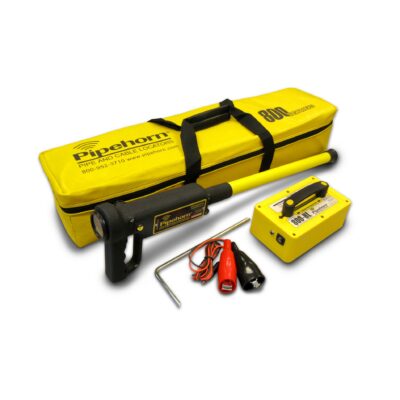
Pipehorn 800-H Pipe & Cable Locator
$1,560
Built for high-frequency locating, the 800-H uses Pipehorn’s 480 kHz signal for water line and other utility locating applications.
The 800-HL adds 9 kHz low-frequency capability to Pipehorn’s 480 kHz mode, giving crews more flexibility across water line and other utility locating applications.
Both Pipehorn 800 Series models can be used for water line locating across a range of applications and field conditions. Choose the model that fits the locating frequencies and methods your crew needs.
Not Sure Which Pipehorn Locator Fits Your Crew?
Compare the Pipehorn 800-H vs. 800-HL to see the differences between single-frequency and dual-frequency models for utility locating applications.
Direct connection through a buried water valve is straightforward, but good conductive contact and proper transmitter setup are essential. Before getting started, make sure the valve assembly, valve key, and target water line are appropriate for this locating method.
Metal-to-Metal Contact Matters
The steel valve key must make conductive contact with the valve operating nut for the key to function as an extension of the connection point.
The Target Line Must Be Conductive
This technique is intended for an appropriate conductive metallic line connected through the valve assembly; it does not make non-conductive plastic pipe traceable.
Connection & Grounding Still Matter
The valve key only changes how the target connection is reached. The rest of the transmitter setup must still follow the appropriate Pipehorn operating procedure.
Can you connect a utility locator transmitter through a water valve?
Yes, when the valve and connected water line provide an appropriate conductive path. A conductive steel valve key can extend metal-to-metal contact from the buried valve operating nut to an accessible connection point for the transmitter lead.
Why use a valve key instead of connecting directly to the valve?
The valve operating nut may be several feet below grade. A conductive steel valve key extends that metal-to-metal contact to the surface, making the transmitter connection easier to access.
Does the valve key carry the locating signal?
Yes. When the steel valve key maintains conductive contact with the valve operating nut, the transmitter signal can pass through the key to the connected conductive water line.
Can this method locate plastic water pipe?
Not by itself. This method requires a conductive path through the valve and connected metallic water line. Non-conductive plastic pipe requires another locating method, such as a traceable rodder.
Can both Pipehorn 800 Series models be used for direct connection?
Yes. Both the Pipehorn 800-H and 800-HL support direct-connection locating. The appropriate model and frequency depend on the target utility and field conditions.
Related Pipehorn Applications
Explore other Pipehorn locating methods for different underground utilities, access points, and field conditions.
SONDE LOCATING
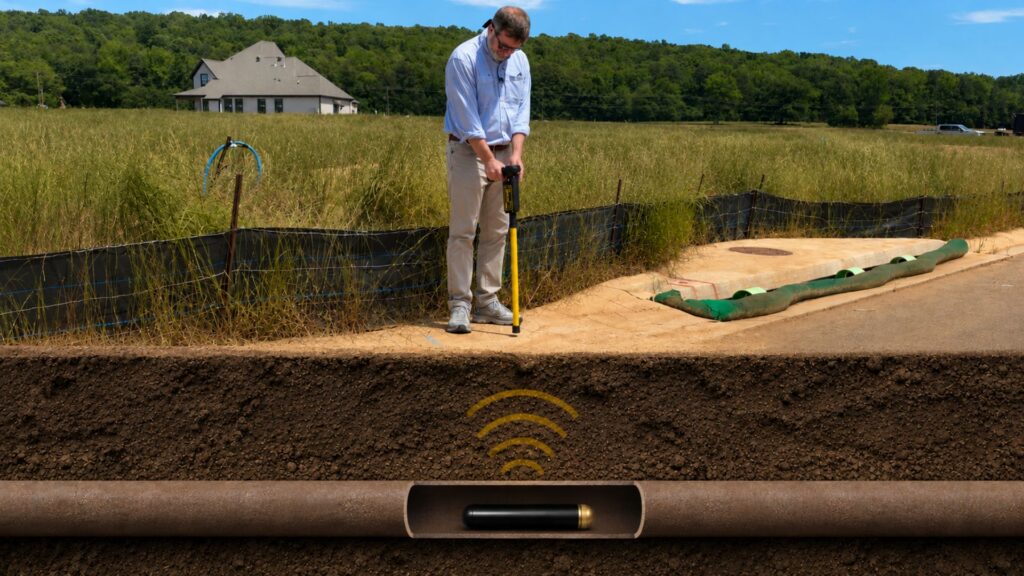
Pinpoint a sonde inside sewer lines, non-conductive pipe, and conduit.
TRACEABLE RODDER LOCATING
Trace an energized conductive rod through non-conductive pipe, conduit, and other accessible underground pathways.
FINDING BURIED VALVES & VALVE BOXES
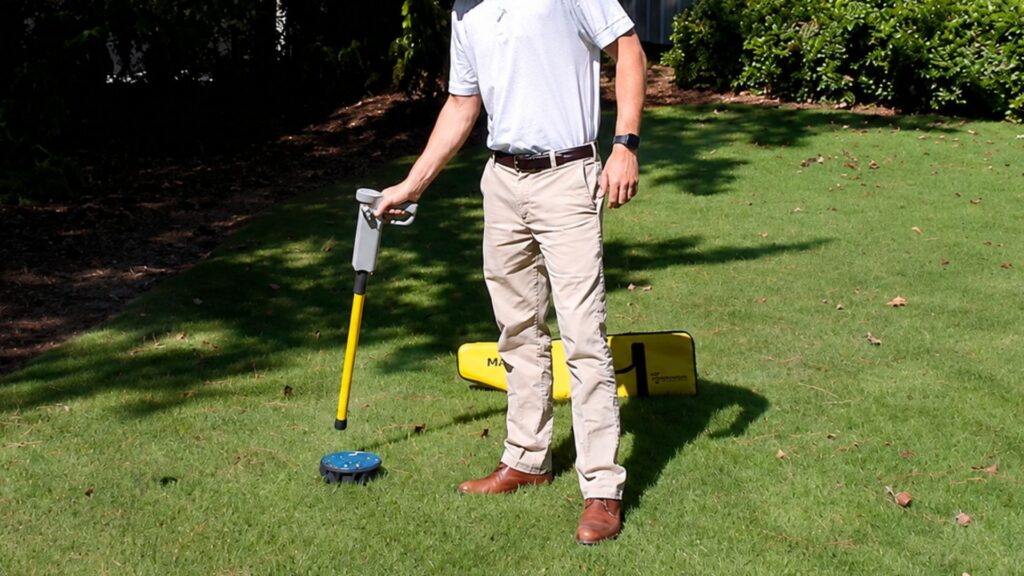
Use a magnetic locator and complementary field methods to find and verify buried ferrous access points.
Not every underground utility provides an easy connection point or traceable path. Pipehorn gives crews multiple locating methods and frequencies to adapt to different field conditions.