Sonde Locator for Sewer, Drain & Pipe Applications
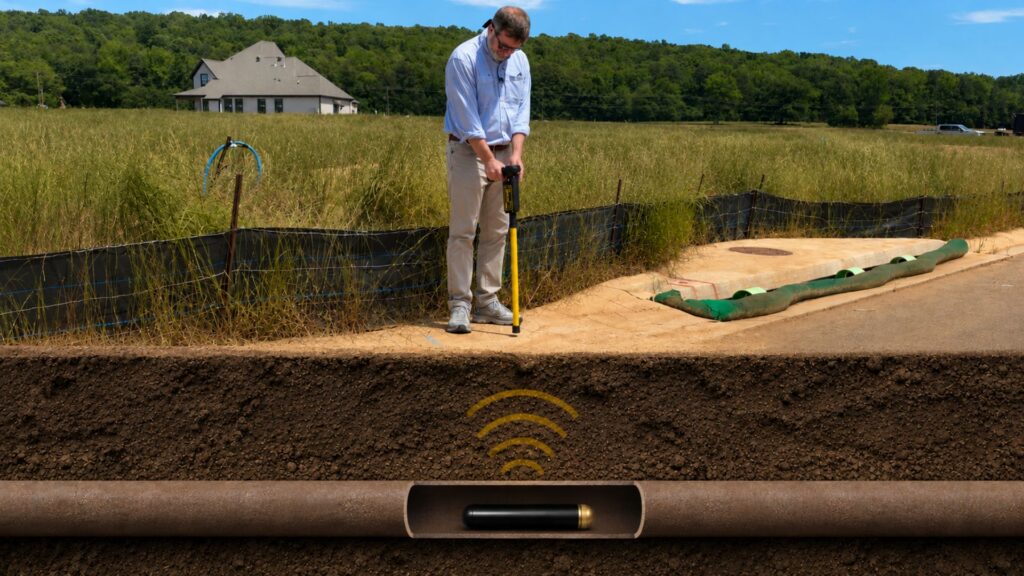
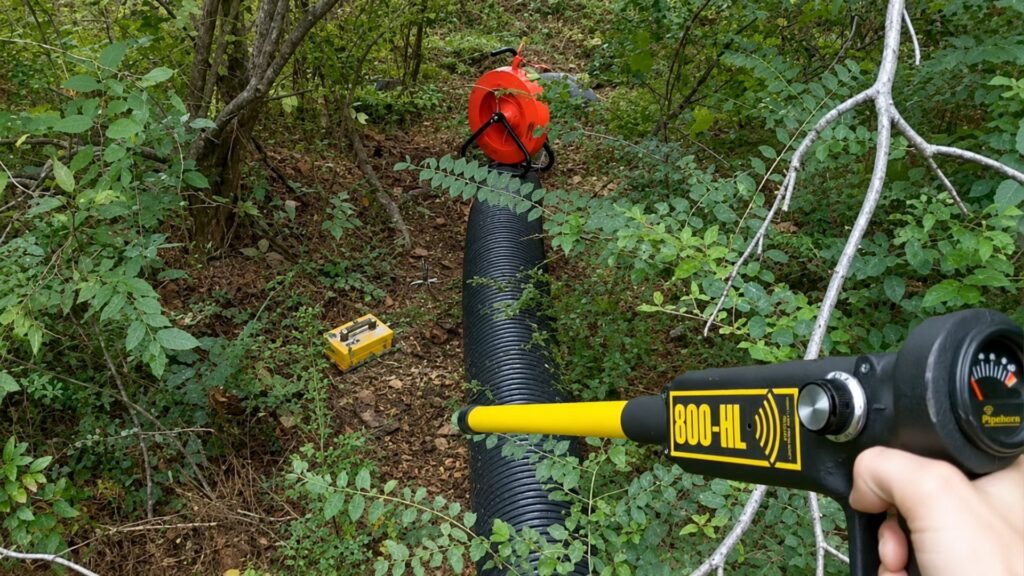
Need to locate a sewer line, drain, plastic pipe, or other non-conductive underground pathway? A compatible sonde provides a detectable signal from inside the line. Using the Pipehorn 800-HL as a sonde locator, crews can pinpoint the sonde from above ground to verify underground pathways and identify specific problem areas before excavation or repair.
When You Can't Trace the Pipe, Locate from Inside It.
Many plastic sewer, drain, conduit, and duct systems do not provide a conductive path for conventional utility locating.
A sonde solves a different locating problem: rather than energizing the pipe itself, the sonde transmits a detectable signal from a specific point inside the underground pathway.
By advancing the sonde through the system and locating it from the surface with the Pipehorn 800-HL, crews can verify routes and pinpoint locations such as clogs, root intrusions, collapsed sections, or other areas that may require excavation or repair.
How to Locate a Sewer Line Using a Sonde
1. ATTACH
Attach the Sonde
Connect a compatible 9.82 kHz sonde to a rodder or other compatible insertion equipment. Use an appropriate adapter when the connection requires one.
2. ADVANCE
Move the Sonde Through the Pathway
Push or advance the sonde through the accessible pipe, sewer, drain, conduit, or duct to the area that needs to be located.
3. LOCATE
Detect the Sonde with the 800-HL
Use the Pipehorn 800-HL in its low-frequency (9 kHz) locating mode to detect the sonde signal from above ground.
4. PINPOINT
Mark the Location or Problem Area
Pinpoint and mark the sonde’s position to verify the underground route or identify the surface location of an obstruction or problem area.
See the Locating Concept in the Field
See how a Pipehorn can be used from above ground to locate an energized target within a plastic pipe or other non-conductive underground pathway.
Why Pair a Sonde with the Pipehorn 800-HL?
Expand what your Pipehorn 800-HL can locate. In addition to traditional Pipehorn locating applications, the 800-HL can detect a compatible low-frequency sonde—giving crews another method for locating non-conductive pipe, conduit, sewer, drain, and duct systems.
Locate Non-Conductive Pathways
Use a detectable signal from inside plastic pipe, conduit, sewer, drain, or duct systems that cannot be directly energized.
Pinpoint Specific Problems
Determine the surface position of the sonde instead of excavating broadly to find an underground problem area.
Investigate Obstructions Before Digging
Advance the sonde to a clog, collapsed section, root intrusion, or other obstruction and mark its location from above ground.
Verify Underground Routes
Move the sonde through the pathway to help establish where an underground pipe or conduit runs.
Pipehorn Locator for Sonde Locating
The 800-HL includes the low-frequency mode needed for sonde locating, in addition to Pipehorn’s 480 kHz locating capability.
Dual-Frequency Locator
9 kHz + 480 kHz
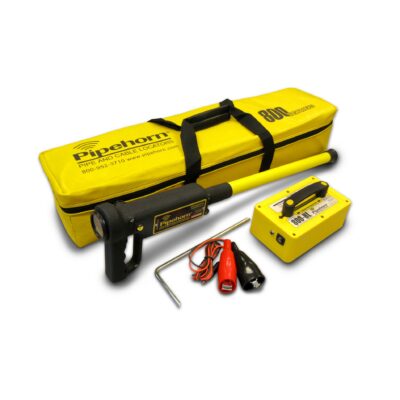
Pipehorn 800-HL Pipe & Cable Locator
$1,860
The Pipehorn 800-HL provides the low-frequency locating capability used with a compatible 9.82 kHz sonde. The receiver detects the sonde signal from above ground so crews can determine its position inside non-conductive pipe, conduit, sewer, drain, and duct systems.
Sonde locating is straightforward, but the setup matters. Before getting started, make sure you have a compatible sonde, an appropriate way to advance it through the pathway, and the correct locating frequency for the application.
Use a Compatible Sonde
The sonde must transmit at a frequency the Pipehorn 800-HL can detect. Pipehorn suggests pairing a 9.82 kHz sonde with the 800-HL’s 9 kHz (low-frequency) mode.
The Sonde Marks a Point
A sonde identifies its own underground position. It does not energize the entire non-conductive pipe.
Advance to the Area You Need to Locate
For blockage or problem-area locating, push the sonde to the point of interest and then pinpoint that position from the surface with a Pipehorn 800-HL.
Rodders & Adapters Support Deployment
A compatible rodder helps move the sonde through the pipe or conduit; an adapter may be required to create a secure connection.
Sonde vs. Traceable Rodder
A sonde is used to pinpoint a specific position. A conductive traceable rodder is energized along its length so the operator can follow the route. These are complementary but different locating methods.
Looking for Traceable Rodder Locating?
A sonde helps pinpoint a transmitter’s location inside the pipe, while a traceable rodder lets you follow an energized route.
A sonde provides a detectable signal from inside a non-conductive pipe, sewer, drain, conduit, or duct. A compatible sonde locator detects that signal from above ground so the sonde’s position can be pinpointed.
Can the Pipehorn 800-HL locate a sonde?
Yes. The Pipehorn 800-HL can detect a compatible 9.82 kHz sonde using its 9 kHz low-frequency mode, allowing crews to pinpoint the sonde’s underground position from the surface.
Can a sonde help locate plastic pipe?
A sonde can be advanced through accessible plastic pipe or conduit and located at points along the route. It locates the sonde’s position rather than directly energizing the plastic pipe itself.
Can a sonde help find a sewer blockage?
Yes. A compatible sonde can be advanced to an obstruction and then pinpointed from above ground with the Pipehorn 800-HL, helping narrow the surface area associated with the blockage.
What is the difference between a sonde and a traceable rodder?
A sonde transmits from a specific point and is used to pinpoint that location. A conductive traceable rodder carries an applied signal along its length, allowing the underground route to be followed.
Do I need a rodder to use a sonde?
The sonde needs a suitable way to be advanced through the pipe or conduit. Depending on the application, that may be a compatible rodder, inspection equipment, or other insertion equipment.
Related Pipehorn Applications
Explore other Pipehorn locating methods for different underground utilities, access points, and field conditions.
LOCATE PLASTIC PIPE & CONDUIT WITH A TRACEABLE RODDER
Trace an energized conductive rodder along the route of non-conductive pipe, conduit, or other accessible underground pathways.
WATER LINE DIRECT CONNECTION
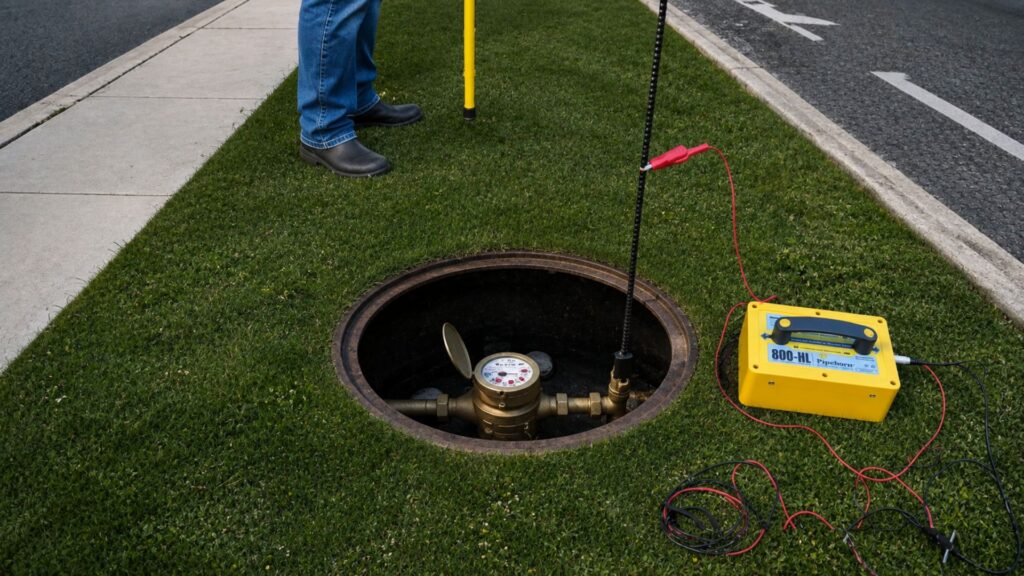
Locate a metallic water line using direct connection through an accessible buried valve.
FINDING BURIED VALVES & VALVE BOXES
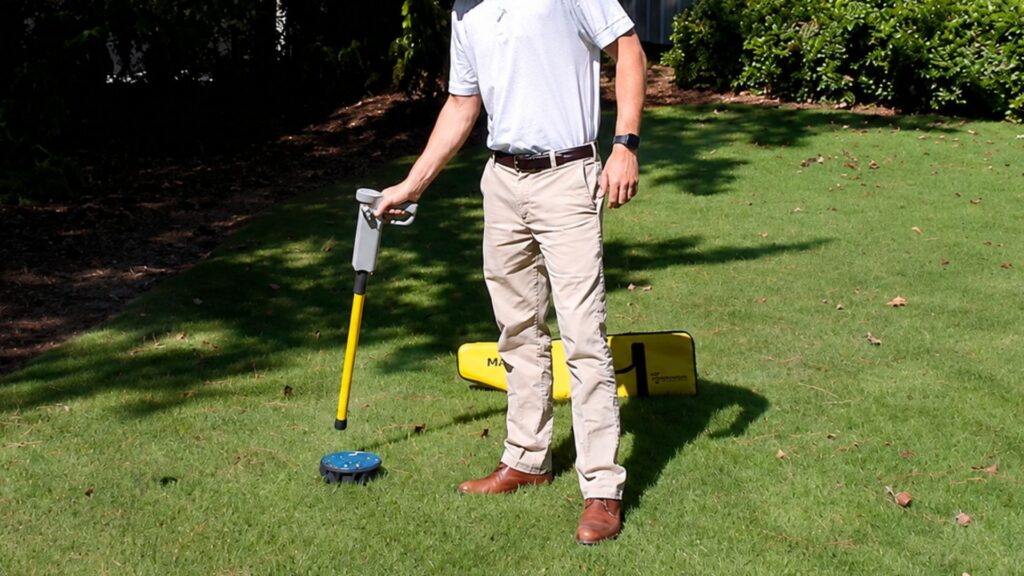
Use a magnetic locator and complementary field methods to find and verify buried ferrous access points.
Not every underground utility provides an easy connection point or traceable path. Pipehorn gives crews multiple locating methods and frequencies to adapt to different field conditions.