
How to Find Underground Water Leaks with Acoustic Leak Detection
Water leaks aren't always visible from the surface. Acoustic water leak detection helps crews survey water systems for suspected leaks, narrow the problem area, and pinpoint the leak location before excavation or repair.
Finding a Water Leak Starts with Knowing Where to Listen
Water escaping from a pressurized underground pipe creates sound and vibration that can travel through the pipe and surrounding material. Acoustic leak detectors help crews listen for those sounds and determine where a leak may be occurring.
Finding an underground water leak typically involves two stages:
- Surverying starts at accessible points such as hydrants, valves, meters, and fittings. By comparing leak sounds at multiple locations, crews can narrow the suspected leak area.
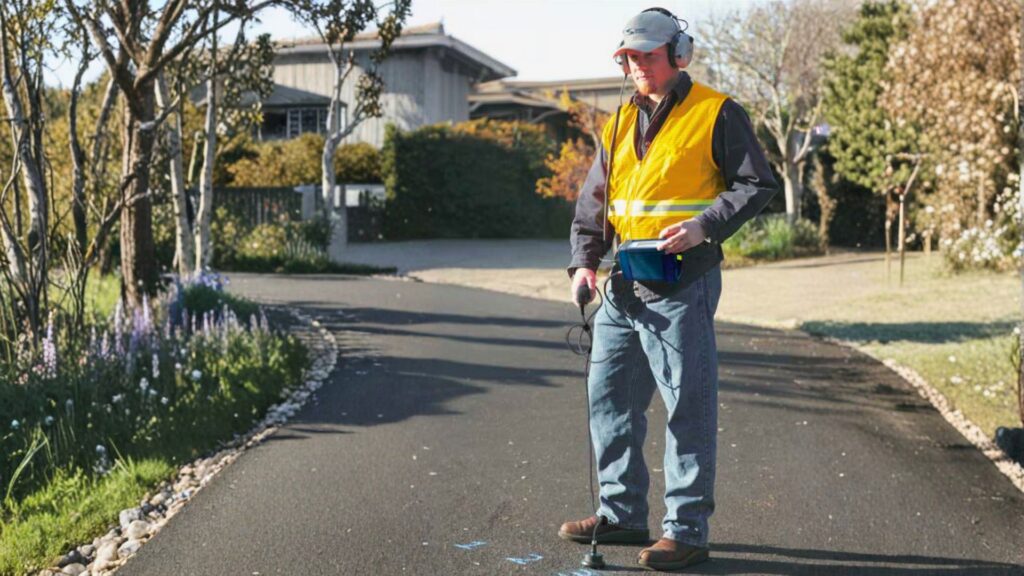
- Pinpointing takes the search directly over the suspected section of pipe. Once the pipe path is known, readings can be taken along the line to narrow the search and identify the strongest leak sound.
How Underground Water Leak Detection Works
1. SURVEY

Listen Across the System
Use an acoustic leak detector at accessible points such as hydrants, valves, meters, and fittings. Compare leak sounds at multiple locations to identify where the sound is strongest.
2. NARROW

Narrow the Search Area
Compare sound levels between listening points to narrow the search to the section of water line where the leak is most likely located.
3. LOCATE
Mark the Pipe Path
Locate and mark the underground water line through the suspected leak area. Knowing the pipe path allows readings to be taken directly over the line during pinpointing.
4. PINPOINT

Find the Leak Location
Listen at intervals directly over the marked pipe path and compare sound levels. Continue narrowing the search to identify the location where the leak sound is strongest.
See Water Leak Detection in Action
Watch how acoustic leak detection equipment is used to survey for and pinpoint underground water leaks.
Hear What Underground Water Leaks Sound Like
Compare real-world recordings to hear how leak sounds can vary by pipe material, distance, and listening point.
NO LEAK
Steel Pipe
Water Flowing
Hear the soft, steady whooshing or humming of water moving through the pipe without a leak.
DISTANT LEAK
Cast Iron
Listening on a Valve
Hear how a distant leak sounds through cast iron. Higher frequencies fade with distance, making the sound less sharp than a nearby leak.
LEAK
Copper Service
Listening on a Hydrant
Hear the sharper, higher-frequency hissing or whooshing of a pressurized leak transmitted through copper pipe.
LEAK
Copper Service
Listening with Meter Turning
Hear a constant, high-pitched leak sound along with the distinct repetitive clicking of the water meter.
LEAK
PVC Pipe
Listening Close to a Valve
Hear the intermittent turbulence of a nearby leak on PVC, with irregular changes in the sound as water escapes.
DISTANT LEAK
Ductile Iron
650' from Leak
Recorded 650 feet from a leak on a high-pressure ductile iron line, this sample demonstrates how a leak can remain audible over a significant distance.
Where Acoustic Water Leak Detection Helps
Acoustic leak detection helps crews investigate suspected leaks throughout a water distribution system. From routine surveying to pinpointing before excavation, listening at the right locations can help narrow the search and identify where further investigation is needed.
Water Utilities & Municipal Systems
Survey hydrants, valves, meters, and other accessible points to identify areas where leak sounds may be present.
Plumbing & Service Lines
Investigate suspected underground leaks on water service lines and narrow the search before repair or excavation begins.
Commercial Properties & Facilities
Help maintenance teams investigate suspected underground leaks around commercial properties, campuses, facilities, and managed properties.
Streets, Pavement & Landscaped Areas
Listen over known pipe paths to help pinpoint suspected leaks beneath asphalt, concrete, turf, and other surfaces.
Find the Right Water Leak Detector
Pipehorn water leak detectors range from straightforward survey tools to advanced pinpointing systems. Compare models by application, listening method, filtering, and features to find the right detector for your work.
| LD-8 | LD-15 | LD-7 | LD-12 | LD-20 | LD-18 | |
|---|---|---|---|---|---|---|
| Survey-Focused | Survey + Pinpoint | Advanced Pinpointing | ||||
| Positioning | Essential Survey | Professional Survey | Compact All-Purpose | Professional All-Purpose | Advanced Professional | Digital Pinpointing |
| Leak Surveying | ★ | ★ | ✓ | ✓ | ✓ | ✓ |
| Leak Pinpointing | — | ✓ | ✓ | ✓ | ✓ | ★ |
| Hydrants / Valves | ✓ | ✓ | ✓ | ✓ | ✓ | ✓ |
| Meters / Fittings | ✓ | Optional Rod | ✓ | ✓ | ✓ | ✓ |
| Ground / Pavement | — | ✓ | ✓ | ✓ | ✓ | ✓ |
| Sound-Level Display | Digital | Meter | — | Meter | Graphic LCD | Digital LCD |
| Filtering / Noise Control | Built-in Notch Filter | Built-in Notch + High/Low Filters |
— | 6 Selectable Filters + Limiter & Filter-Thru Switches |
Advanced Multi-Stage Filters | Notch Filters, Advanced + Auto Noise Reduction |
| Data Recording | — | — | — | — | ✓ | ✓ |
| Mobile App | — | — | — | — | ✓ | — |
| Key Advantage | Efficient routine surveys | Professional survey performance | Simple versatility | Professional versatility | Sensitivity + modern features | Noise cancellation + Data-assisted pinpointing |
Ready to Choose a Water Leak Detector?
Explore the full Pipehorn water leak detector lineup, or download the comparison guide for an easy reference to model capabilities and features.
What Affects Water Leak Sounds?
Leak sounds can change significantly from one location to another. Understanding the conditions around the pipe can help crews know what to expect when surveying and pinpointing a suspected leak.
PIPE MATERIAL
Metal vs. Plastic
Metal pipes such as iron, copper, and steel generally carry leak sounds farther and at higher frequencies. PVC and other non-metallic pipe tend to dampen the sound, making leaks more difficult to hear at a distance.
WATER PRESSURE
Higher Pressure, Stronger Sound
Higher water pressure generally produces louder leak noise, making the sound easier to detect. Beyond a certain point, however, additional pressure has less effect on the sound level.
PIPE DIAMETER
Size Changes Sound Travel
Smaller-diameter pipes tend to carry stronger, higher-frequency leak sounds. As pipe diameter increases, leak noise generally does not travel as far along the line.
PIPE DEPTH
Deeper Means More Sound Loss
The farther sound has to travel from the pipe to the surface, the more it can weaken. Deeper leaks may sound quieter and more muted at the surface.
SOIL CONDITIONS
Compaction Matters
Hard, well-compacted soil generally transmits leak sounds better than loose or sandy soil. Wet, loose, or freshly backfilled ground can cause sounds to fade more quickly.
SURFACE MATERIAL
Hard vs. Soft Surfaces
Asphalt and concrete can help transmit or resonate with leak sounds, while grass and loose soil provide less resonance and can make good sensor contact more difficult.
Locate the Pipe Before You Pinpoint the Leak
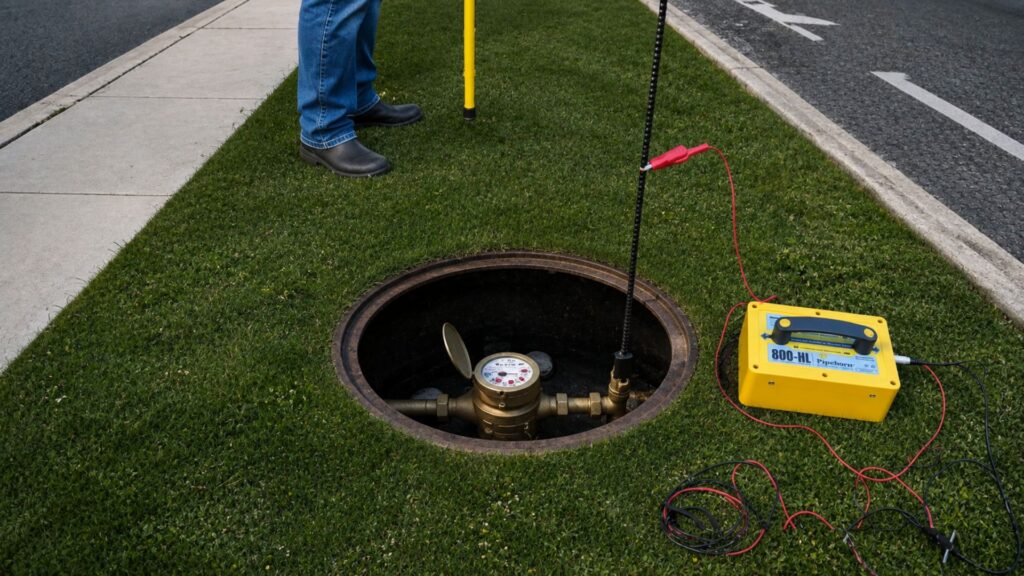
Once you’ve narrowed the suspected leak area, knowing the exact path of the water line helps you take acoustic readings directly over the pipe. The Pipehorn 800-HL provides both 9 kHz and 480 kHz locating frequencies, giving crews options for tracing conductive water lines and tracer wire before pinpointing the leak.
FAQ
Acoustic water leak detection typically begins by listening at accessible points such as hydrants, valves, meters, and fittings to identify where leak sounds are strongest. Once the suspected section is narrowed, the pipe path can be located and marked so additional readings can be taken directly over the line to pinpoint the leak.
Leak sounds can range from a hiss or whoosh to a lower-frequency rushing or rumbling sound. What you hear depends on factors such as pipe material, water pressure, pipe diameter, depth, soil conditions, and the distance between the leak and listening point.
Yes. Acoustic leak detectors equipped for ground listening can be used to listen for suspected leaks beneath surfaces such as concrete and asphalt. Knowing the pipe path helps crews position the sensor over the line and compare readings as they narrow the leak location.
Yes, but PVC and other non-metallic pipe generally do not transmit leak sound as far as metallic pipe. Crews may need to listen closer to the suspected leak and take readings at shorter intervals when working with plastic pipe.
Surveying is used to determine whether leak noise is present and narrow the search to a section of the water system. Pinpointing is the more focused process of taking readings over the suspected pipe path to identify the strongest leak sound and narrow the location before excavation or repair.
Knowing the pipe path is important when taking ground readings because it allows the sensor to be positioned directly over the line. When the water line is conductive or has tracer wire, a pipe and cable locator such as the Pipehorn 800-HL can be used to locate and mark the line before pinpointing.
Related Pipehorn Applications
Explore other Pipehorn locating methods for different underground utilities, access points, and field conditions.
WATER LINE DIRECT CONNECTION
Locate and mark conductive water lines so acoustic readings can be taken directly over the pipe when pinpointing a suspected leak.
FINDING BURIED VALVES & VALVE BOXES
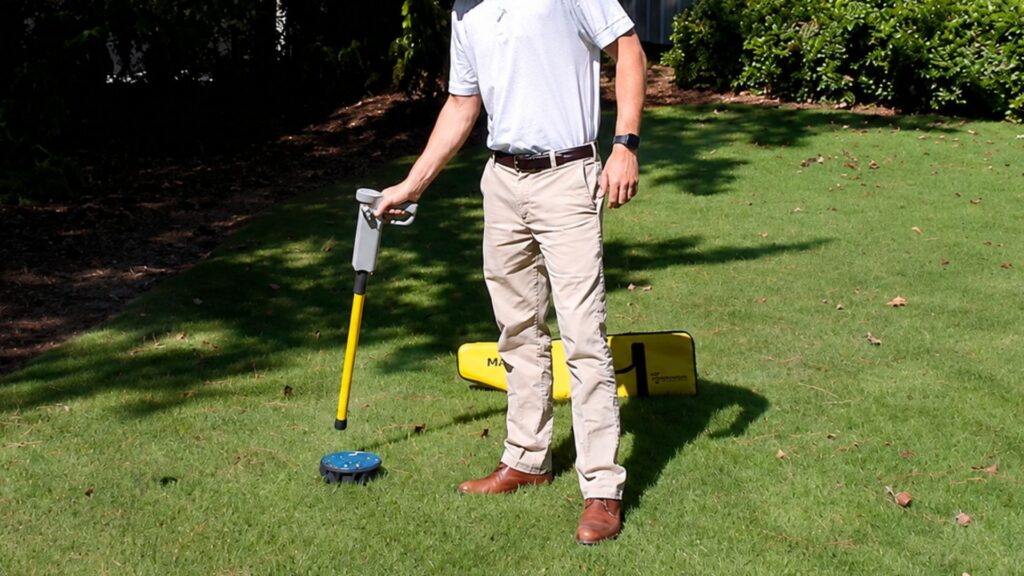
Locate buried ferrous valves, valve boxes, and other access points that may be needed when surveying a water system for leaks.
TRACER WIRE LOCATING
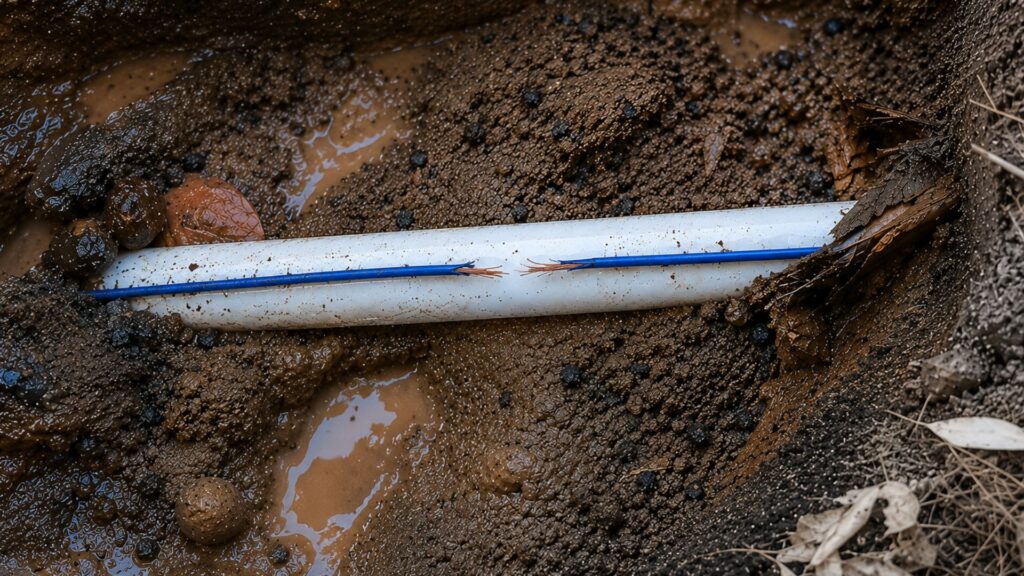
Trace water lines using installed tracer wire, including situations where damaged or corroded tracer wire makes the line more difficult to follow.
Looking for more locating applications?
Need Help Finding the Right Water Leak Detector?
Not every leak detection job is the same. Pipe material, pressure, depth, surface conditions, and whether you’re surveying or pinpointing can all affect the equipment you need. Pipehorn can help you choose the right water leak detector for your application.