How to Locate Plastic Pipe & Conduit with a Traceable Rodder
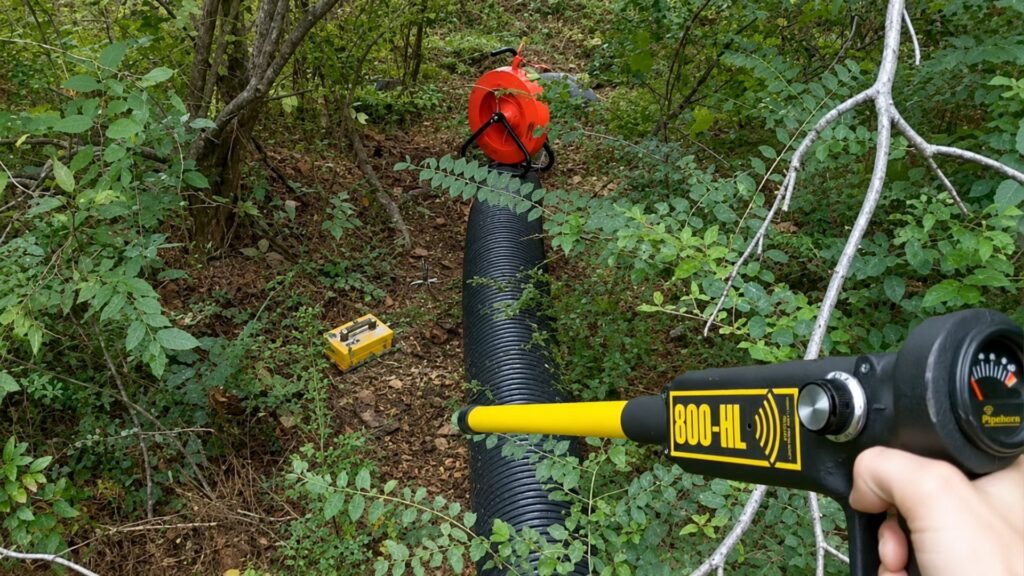
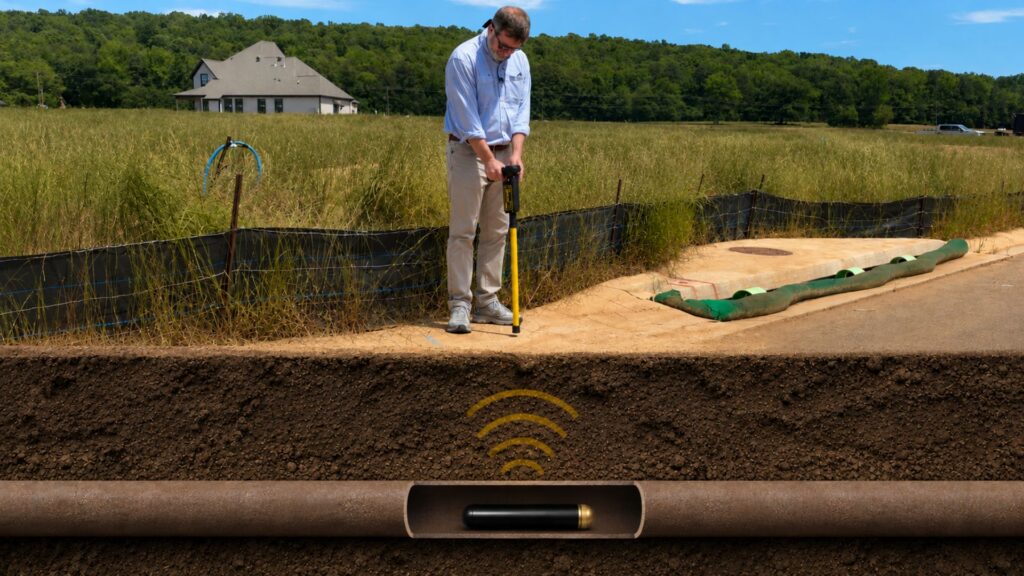
Plastic pipe, PVC conduit, and other non-conductive underground pathways can be difficult to locate when no tracer wire is available. A traceable rodder creates a locatable path that can be energized with a Pipehorn transmitter and traced from above ground using a Pipehorn 800 Series receiver.
Plastic gas and water lines, fiber conduit, underground ducts, sewer laterals, and other non-conductive utilities may not provide an accessible conductive path for conventional utility locating.
When there is access to the pipe or conduit, a compatible traceable rodder can be inserted into the pathway and energized with the Pipehorn transmitter.
The Pipehorn receiver then follows the energized rod from above ground, giving crews a way to trace the underground route before excavation, installation, maintenance, or repair work.
How Traceable Rodder Locating Works
1. INSERT
Insert the Traceable Rodder
Feed a compatible conductive traceable rodder into the accessible plastic pipe, conduit, duct, or service line.
2. CONNECT
Connect the Pipehorn Transmitter
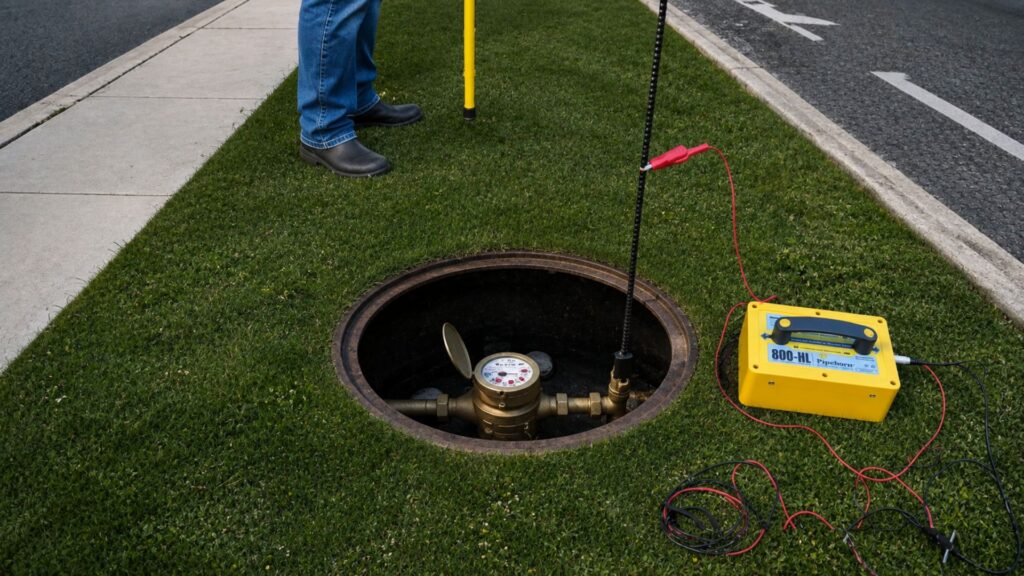
Use the Pipehorn Cable Assembly to connect the transmitter to the rodder, applying the locating signal along the inserted path.
3. LOCATE
Trace the Rodder at 480 kHz
Use the Pipehorn receiver’s High-Frequency (480 kHz) mode to follow the energized rodder from above ground.
4. MARK
Identify the Underground Route
Follow and mark the path as the rod advances, helping establish the route of the underground utility or conduit.
See Traceable Rodder Locating in Action
Watch how a Pipehorn locator can be used with a traceable rodder to trace plastic pipe from above ground when an existing tracer wire isn’t available.
Where Traceable Rodders Are Used for Underground Locating
Traceable rodders create a conductive path through non-conductive pipe and conduit, giving crews a way to trace underground routes when a tracer wire isn’t available.
Gas & Water Service Lines
Trace accessible plastic service lines when an existing tracer wire is unavailable.
Fiber & Telecom Conduit
Trace underground conduit and microduct used for telecommunications and fiber installations, including FTTH pathways.
Sewer Laterals
Verify the route of non-conductive sewer laterals before excavation and support cross-bore prevention work.
Underground Ducts & Conduit
Trace plastic pipe, ducts, drain lines, and other accessible non-conductive pathways that cannot be directly energized.
Pipehorn Locators for Traceable Rodder Locating
High-Frequency Locator
480 kHz
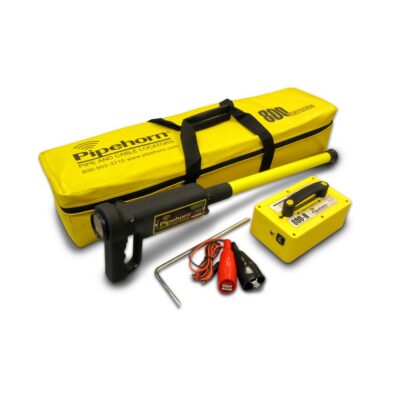
Pipehorn 800-H Pipe & Cable Locator
$1,560
Built for high-frequency locating, the 800-H works with a traceable rodder to trace accessible plastic pipe and conduit from above ground.
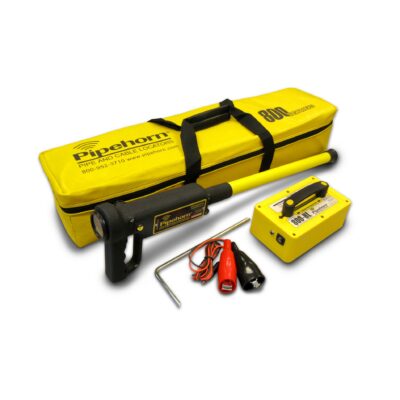
The 800-HL adds low-frequency capability while retaining Pipehorn’s 480 kHz high-frequency mode, giving crews more flexibility across different locating applications.
Both Pipehorn 800 Series models can be used with a conductive traceable rodder to locate plastic pipe, conduit, and other non-conductive pathways. Choose the model that fits the locating frequencies your crew needs.
Not Sure Which Pipehorn Locator Fits Your Crew?
Compare the Pipehorn 800-H vs. 800-HL to see the differences between single-frequency and dual-frequency models for utility locating applications.
Traceable rodder locating is straightforward, but the setup matters. Before getting started, make sure you have the right rodder, access point, and locating frequency for the application.
How do you locate plastic pipe without tracer wire?
When there is access to the pipe or conduit, a compatible conductive traceable rodder can provide a path that a Pipehorn locator can trace from above ground.
What Pipehorn locators work with a traceable rodder?
Both the Pipehorn 800-H and 800-HL support compatible traceable-rodder applications using 480 kHz.
Can you locate fiber conduit without tracer wire?
When the conduit is accessible, a compatible traceable rodder can be inserted and energized with the Pipehorn transmitter so the underground pathway can be traced from above ground.
What is the difference between a traceable rodder and a sonde?
A traceable rodder creates an energized path that can be followed along its length. A sonde transmits from a specific point inside a pipe or conduit and is used to pinpoint that location from the surface.
Can a traceable rodder be used for sewer laterals?
Compatible traceable rodders can be used to verify accessible non-conductive sewer-lateral routes and may support cross-bore prevention work before excavation.
Can you locate a fish tape with a Pipehorn?
A conductive fish tape may be used as a locating path when it can be properly connected to the Pipehorn transmitter and safely energized. Nonconductive fiberglass fish tape cannot carry the locating signal. For applications designed specifically for underground locating, a conductive traceable rodder provides a purpose-built locating path.
Related Pipehorn Applications
Explore other Pipehorn locating methods for different underground utilities, access points, and field conditions.
SONDE LOCATING
Pinpoint a sonde inside sewer lines, non-conductive pipe, and conduit.
WATER LINE DIRECT CONNECTION
Locate a metallic water line using direct connection through an accessible buried valve.
FINDING BURIED VALVES & VALVE BOXES
Use a magnetic locator and complementary field methods to find and verify buried ferrous access points.
Not every underground utility provides an easy connection point or traceable path. Pipehorn gives crews multiple locating methods and frequencies to adapt to different field conditions.