
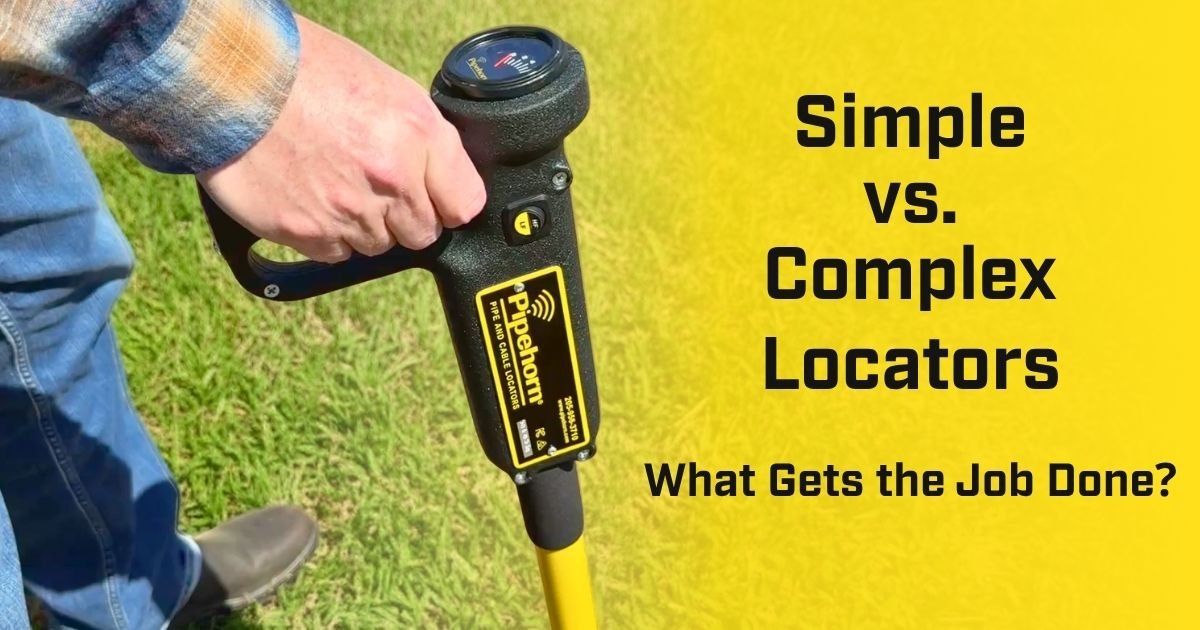
Simple vs. Complex Utility Locators: What Gets the Job Done?
There’s no shortage of “advanced” utility locators on the market.
More frequencies. More modes. More screens. More features.
The technology has come a long way, but it can be too much at times.
Crews dealing with broken tracer wire, poor conductors, or uncertain marks often find that the most effective utility locator isn’t the most complex; it’s the one that delivers clear, reliable feedback.
More Features Don’t Always Mean More Clarity
What Crews Need from a Utility Locator in the Field: Clear, Immediate Feedback
Modern locators can do a lot, and they certainly have their place in damage prevention.
They often include:
- Multiple selectable frequencies
- Layered menus and multifunction controls
- Companion apps or software integrations
- Advanced settings that allow for different ways to view the data, spec tracking, and locate documentation
In a controlled environment, that’s manageable.
But for others, it can slow things down.
In the right hands, those devices can be powerful.
But they also come with tradeoffs.
It takes time to learn how everything works together. It takes experience to know which settings to use and when. And in many cases, it takes ongoing maintenance—calibration, updates, and software management—to keep everything running properly.
Most locates don’t require more features.
They require clear feedback.
Crews need to know:
- Where the target line is
- Whether they’re centered over it
- And if the signal they are receiving from their locator can be trusted
That’s where simplicity starts to stand out.
With Pipehorn, the interface is intentionally straightforward. A gauge gives you a clear visual response. A gain dial lets you adjust sensitivity instantly. A simple frequency switch allows you to move between low and high frequency without digging through settings.
There’s nothing to configure before you start.
And nothing pulling your attention away from the locate itself.
Simple vs. Complex Locators
A quick look at how different approaches impact real-world locating.
Feature-Heavy Locator
More features, more to manage
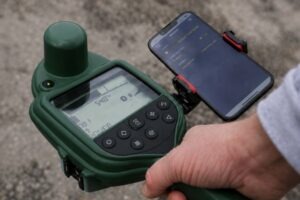
- Multiple screens and menus to work through with lots of data
- Wide range of frequencies and settings to choose from
- Flat audio tone that can result in a wide response across the center of the utility
- Longer learning curve for new operators
- Often requires yearly calibration
- May depend on apps or software updates
- Can track & document the specifics of a locate
Pipehorn Simple Approach
Clear feedback, faster decisions
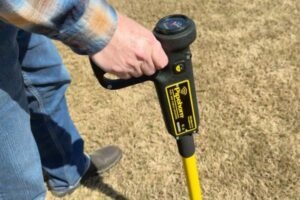
- Simple gauge, gain dial, and frequency switch
- Dual frequency (9 kHz + 480 kHz) without added complexity
- Changing pitch tone helps narrow the center of the target more easily
- Easy to learn and use in the field
- No required annual calibration
- No apps, no setup—ready when you are
In the field, the difference isn’t how much a locator can do—it’s how quickly and confidently it helps you complete a locate.
Pipehorn’s dual-frequency design was built to give utility and maintenance crews clear feedback in real-world locating conditions without adding unneeded complexity.
The Difference You Can Hear
One of the biggest differences isn’t something you see—it’s something you hear.
Most locators use a steady tone that increases or decreases in volume. You’re relying on loudness of the device to judge the center of the target.
Pipehorn works differently.
The tone changes pitch as you move across a conductor.
That shift makes it easier to recognize when you’re directly over your target, pinpointing the location. Your ears pick up the change naturally, without having to constantly check a screen or interpret small visual differences. The highest pitch tone indicates when you are centered over your target.
It’s a simple concept—but in the field, it makes a noticeable difference in how quickly you can pinpoint a utility line and move forward.
Simplicity Reduces the Learning Curve
Another place simplicity shows up is in training.
More complex locators often require time to learn:
- How different modes interact
- When to change frequencies
- How to interpret multiple data points
That learning curve can slow down onboarding and create inconsistencies between operators.
With a simpler system, crews can get up to speed faster.
The controls are easy to understand. The feedback is clear. And the process is more intuitive—especially for newer technicians.
That doesn’t replace experience.
But it removes unnecessary barriers to getting started.
Less Maintenance. More Time in the Field.
Simplicity doesn’t just affect how a locator is used—it affects how it’s maintained.
Many systems require:
- Annual calibration
- Software or firmware updates
- App compatibility and connectivity
Pipehorn is built differently.
There’s no required yearly calibration. No apps to manage. No software updates to keep up with.
That means less downtime and fewer interruptions—especially for crews that rely on their equipment every day.
Why Simplicity Matters in Difficult Utility Locates
The value of simplicity becomes most obvious when things aren’t straightforward.
When the signal drops out partway through a run. When you’re dealing with broken tracer wire. When multiple lines are running in the same area and create signal bleed.
In those situations, the goal isn’t to use more features.
It’s to get a clear response as quickly as possible.
Pipehorn’s dual frequency design, including 480 kHz ultra-high frequency, gives crews a way to pick up conductors when standard approaches fall short. And because the controls are simple, making that adjustment is immediate.
There’s no guessing which setting to use.
Just a quick flip of the switch, without having to go back and change any settings at the transmitter, and the locate can keep going.
Simple Utility Locating Equipment. Real-World Performance.
Simplicity isn’t about doing less. It’s about removing what doesn’t help.
In the field, that often leads to:
- Faster decisions
- More consistent results between operators
- Less time spent adjusting/maintaining equipment
- More confidence before digging
Because at the end of the day, crews aren’t judged on how many features they used.
They’re judged on whether the locate prevented damage.
Ready for a Simpler Approach to Utility Locating?
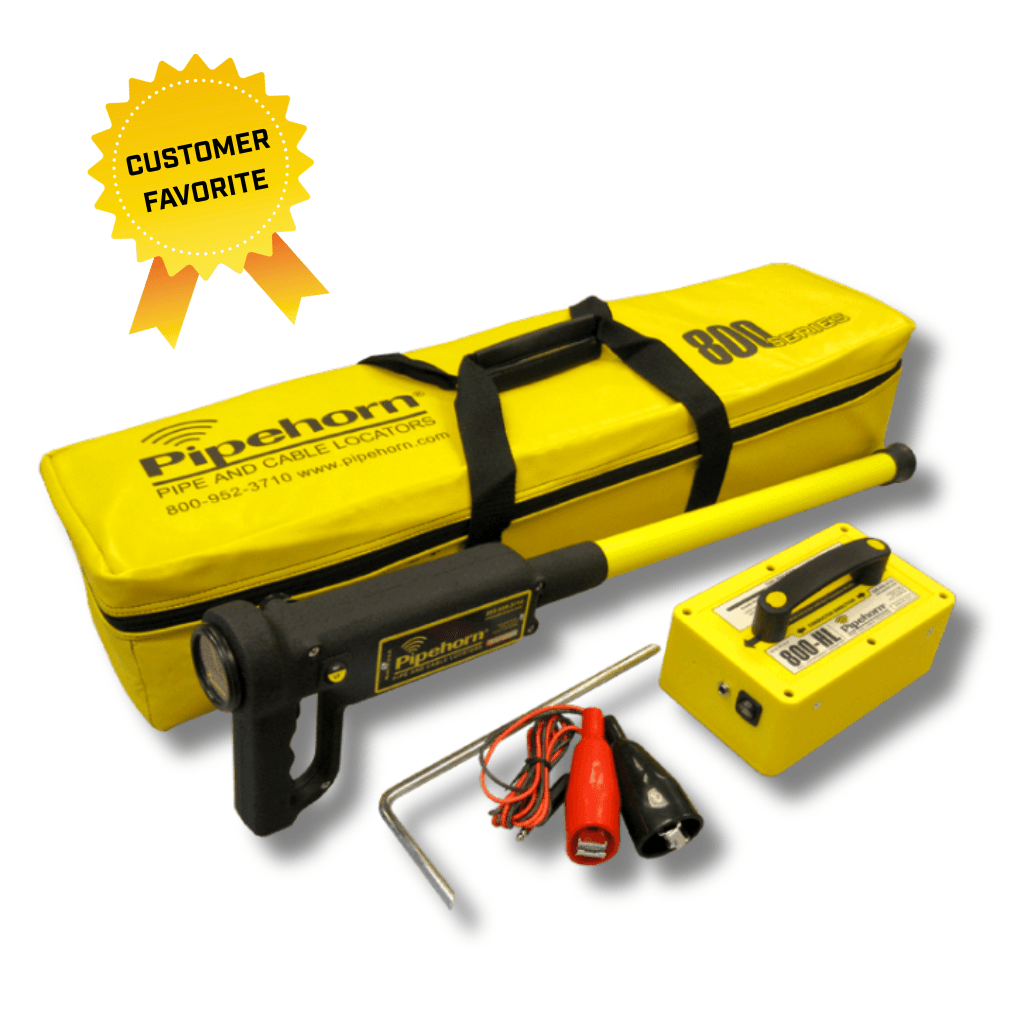
The Pipehorn 800-HL
Built to provide clear feedback without unnecessary complexity, the Pipehorn 800-HL helps crews locate underground utilities with confidence in real-world conditions.
Why crews choose it:
- Simple gauge, gain dial, and frequency switch
- Dual frequency performance without added complexity
- No required annual calibration
Built for clear, straightforward locating in the field.