Calling 811 and verifying locate marks is the first step before excavation.
But experienced crews know that not every line is easy to locate.
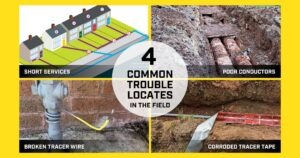
Sometimes there is damaged tracer wire. Sometimes there is an abandoned service no one knew was there. Sometimes marks are missing, or the route just does not make sense.
That is why many crews perform a Safety Sweep before they dig.
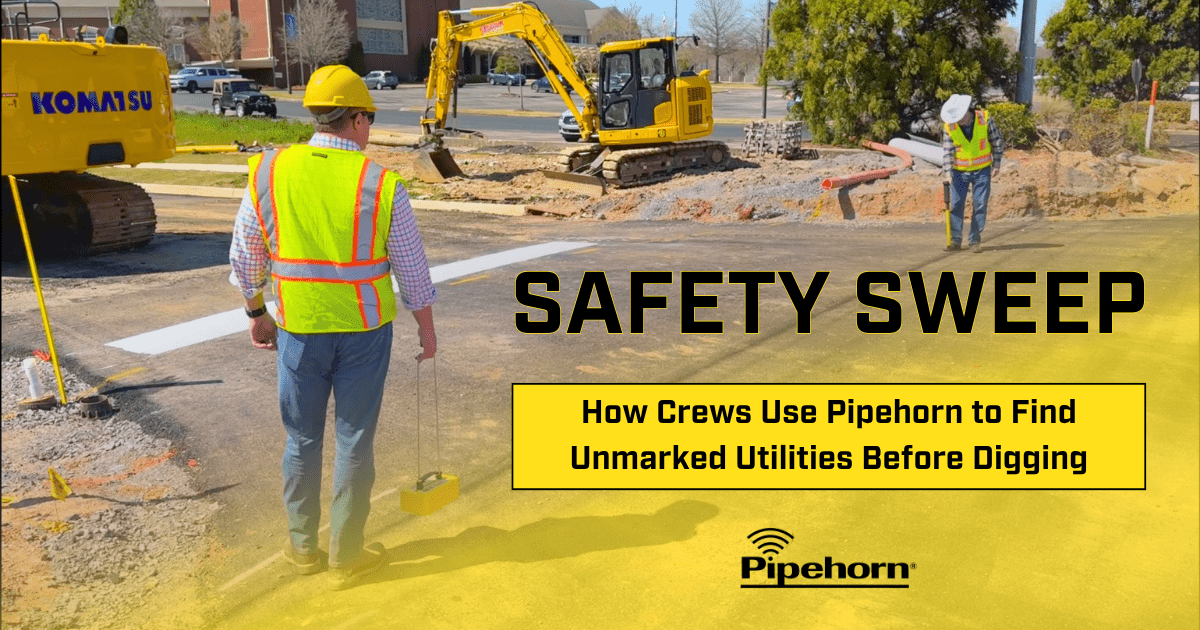
A Safety Sweep is a quick scan of the work area using a locator with an ultra-high frequency signal. The goal is simple: look for conductors that may have been missed during the original locate.
What Is a Pipehorn Safety Sweep?
A Pipehorn Safety Sweep uses the Pipehorn 800-HL’s 480 kHz ultra-high frequency to quickly scan an area for buried conductors.
Unlike a traditional direct connection locate, a Safety Sweep uses inductive locating to “light up” all conductors in the dig area.
That makes it especially useful for finding:
- Damaged or broken tracer wire
- Cast or ductile iron with poor continuity
- Short side services
- Old or abandoned lines
- Utilities that may not have been marked
- Congested utility corridors with several lines close together
The idea is to be able to quickly perform a double-check of the dig area before excavation to verify marks and make sure nothing was missed.
Why a Safety Sweep Matters
Many difficult utility strikes happen because the line was not where everyone expected—or because it was not marked at all.
The Common Ground Alliance highlighted a case study from Peoples Gas and North Shore Gas after crews were struggling with difficult-to-locate and unmarked lines. They adopted an ultra-high-frequency Safety Sweep technique before excavation and saw a 67% reduction in damages overall and a 77% reduction in damages caused by unmarked facilities.
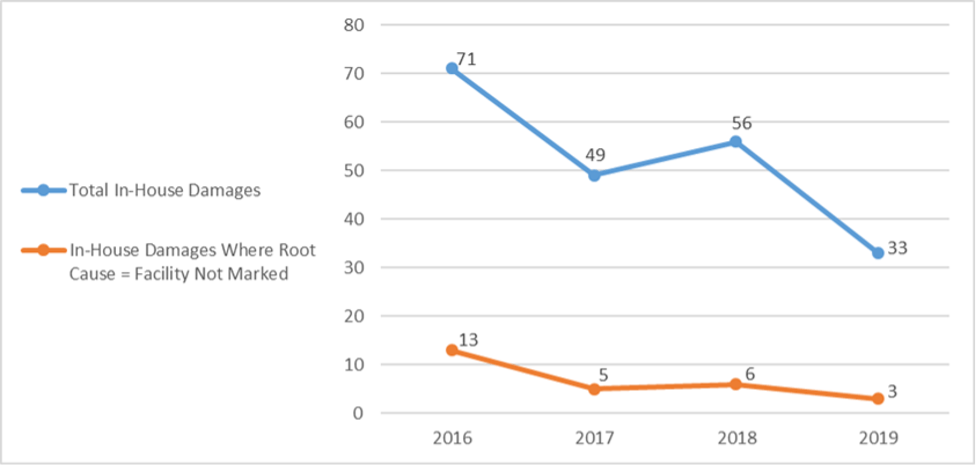
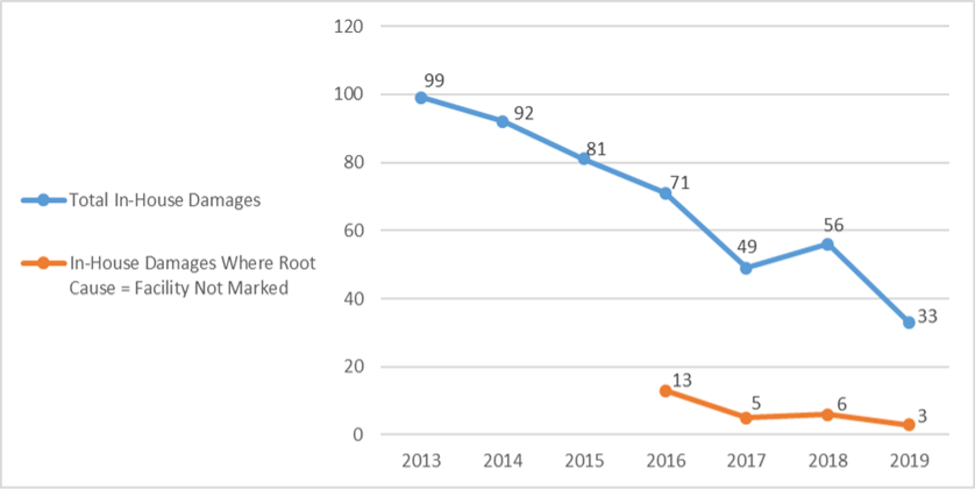
That is a big reason more crews are using a Safety Sweep as part of their normal process, especially when:
- Digging in congested areas
- Working around old or poorly documented infrastructure
- The locate does not make sense
- The route of the target changes unexpectedly
- The signal disappears
- A missed line could create a serious safety risk
How to Perform a Pipehorn Safety Sweep
A Pipehorn Safety Sweep is simple and only takes a few minutes.
- One person carries the transmitter.
- Another person carries the receiver.
- Stand about 30 feet apart.
- Keep the transmitter and receiver lined up with each other.
- Walk slowly across the work area in a grid pattern.
The goal is to scan the entire area and “light up” any conductors that respond.
If you get a signal where there should not be one, stop and investigate before digging. A strong response may indicate an unmarked utility, an abandoned line, or a conductor running in a different direction than expected. Pipehorn recommends keeping the tone strong but not beeping continuously.
Pipehorn Safety Sweep:
When Should You Perform a Safety Sweep?
A Safety Sweep is especially valuable when:
- You cannot directly connect to the line
- You are working in an area with old utilities
- You suspect damaged tracer wire or poor continuity
- The locate route does not make sense
- There are multiple utilities in the same corridor
- You are excavating near homes, schools, hospitals, downtown areas, or other high-risk locations
In other words: perform a safety sweep for peace of mind before the first shovel goes in the ground.
Why Pipehorn Uses Both Low and High Frequency
The Pipehorn 800-HL gives crews two ways to verify what is underground:
- 9 kHz low frequency helps isolate and stay on the correct conductor in congested areas.
- 480 kHz high frequency helps find difficult-to-locate lines, damaged tracer wire, short services, and unmarked utilities during a Safety Sweep.
Many crews use both.
First, they trace the known line with 9 kHz. Then, they perform a 480 kHz Safety Sweep around the work area to make sure nothing else is there.
Because the goal is not just to locate one line.
It is to find what others might miss.