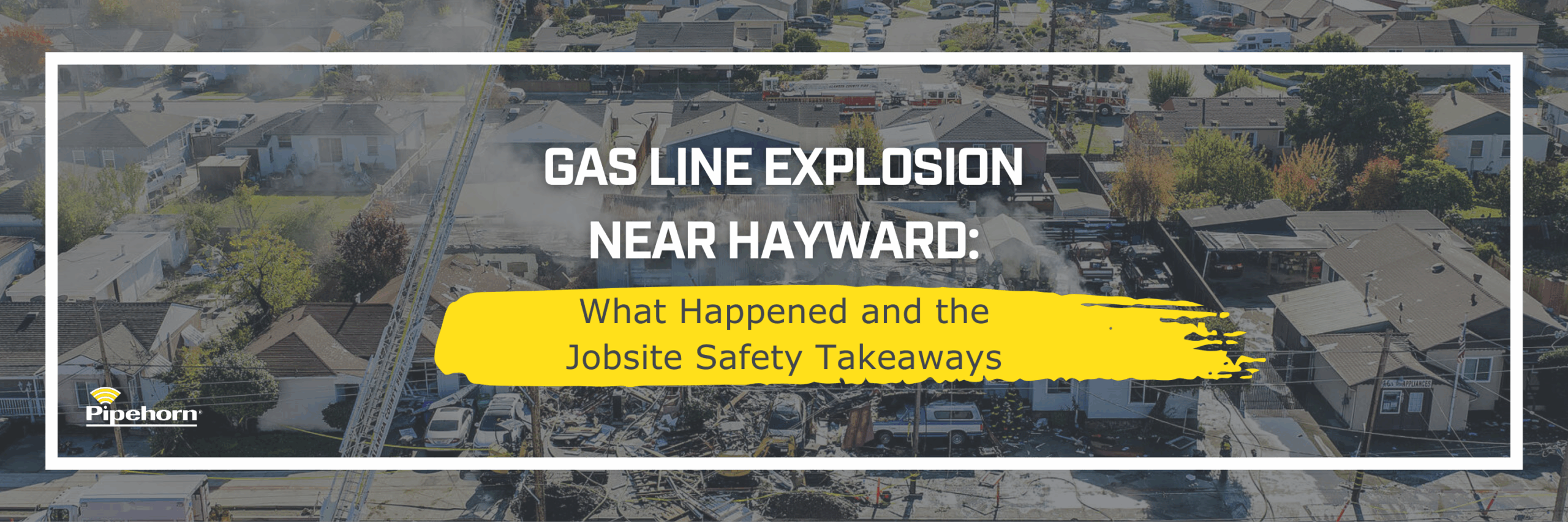
On December 11, 2025, a natural gas pipeline incident in Ashland (near Hayward, CA) escalated into a serious explosion and fire. At least one home was destroyed, others were damaged, and six people were taken to the hospital. Authorities reported a third-party construction crew struck an underground gas line around 7:35 a.m. Crews worked to isolate the line, and the gas flow was stopped by 9:25 a.m. About ten minutes later, the explosion occurred. The National Transportation Safety Board (NTSB) is leading the investigation.
Events like this are exactly why damage prevention is so critical. When a gas line is compromised, the consequences can be severe. That is why planning, verification, and communication are paramount in damage prevention practices.
Good locating = Safer digging
Locating before you dig plays an important role in improving safety and reducing risk. With the right training, technique, and tools, crews are better equipped to understand site conditions before work begins.
Most utility strikes don’t happen because people are careless. They happen because job sites are complex:
- Marks may not always reflect current conditions.
- Not all utilities are marked using the same tools or practices.
- Tracer wire can be broken or corroded.
- Congestion can require careful review.
- Even familiar sites can benefit from a fresh locate.
That’s why strong safety programs treat locating like a process, not a single step: sweep, verify, discover, and communicate every time.
Safety measures that help reduce the risk of utility strikes
1) Start with the locate request and a clear plan
Always follow your local 811 requirements and site rules. Then make sure the field plan is understood before work starts:
- Identify the exact dig area
- Understand the tolerance zones and where hand digging may be required
2) Verifying marks is crucial
This is where locating equipment becomes part of risk control.
Pipehorn manufactures underground pipe & cable locators that crews use to trace conductors, confirm direction, and better define where utilities run before excavation. The goal isn’t just detecting a signal, it’s improving confidence in what’s actually in the ground before steel meets soil. And like any safety tool, locators are most effective when operators are trained to interpret signals, recognize uncertainty, and verify results.
3) Sweep for unmarked utilities in the dig area
In the Hayward incident, officials reported the line was struck during construction activity and the explosion occurred later, after the initial damage.
That delay is an important reminder: the most critical opportunity to prevent an incident is often before anything goes wrong.
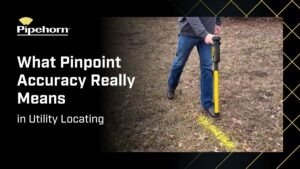
Crews use equipment like the Pipehorn 800-HL to sweep a dig area for unmarked utilities and help locate tough conductors that other devices struggle to find.
4) Use the right method: hook up when you can, induce (non-contact locating) when you must
Direct connection (conductive) is the best practice. But it isn’t always possible to directly hook up to the conductor on jobsites.
The Pipehorn 800-HL is designed to support both conductive and inductive locating. It allows direct connection when possible but also provides high-frequency inductive capability to find and trace lines when you can’t hook up.
5) Communicate like the next decision depends on it (because it does)
If anything is uncertain, the best move is to stop, regroup, and escalate. Sources note the response to the Hayward incident involved mutual aid and about 75 firefighters and included injuries such as burns, respiratory issues, and fractures.
Incidents like this show how fast a utility strike can turn serious, reinforcing the need for clear procedures, communication and decisions in the field.
How Pipehorn fits into a damage prevention mindset
Pipehorn builds locating equipment that supports crews in real field conditions doing the day-to-day work of damage prevention. The focus is simple: help crews stay safe by locating what’s in the ground before digging begins.
Pipehorn locators are used to:
- Trace underground pipes and cables to help clearly mark their path prior to excavation.
- Provide a fast, simple response in the field (visual + audio feedback) to help crews work efficiently without overcomplicating the locate.
- Verify the marks and sweep the dig area for unmarked lines to reduce incidents and lower the risk of utility strikes.
For crews that don’t regularly perform safety sweeps, the value often becomes clear once they try it. A sweep adds another layer of safety. Using the right technique and frequency, , can make a meaningful difference in congested or unfamiliar areas where unknown lines may be present.
No tool can guarantee prevention of every incident. But better locating and better verification can significantly reduce the odds of a strike and help teams make safer decisions earlier. Additionally, damage prevention also improves when crews are trained to use locating equipment correctly and consistently, turning good tools into reliable decision-making support in the field.
The recent Hayward-area gas line explosion is a reminder that underground utilities leave little margin for error, and that a single strike can quickly affect an entire community.
Damage prevention is built on disciplined habits: plan the work, verify the marks, sweep the dig area, and keep communication clear. And when crews have reliable locating tools on the truck, they’re better equipped to make the safe decision before the ground is disturbed.
Learn how Pipehorn locators support safer digging.